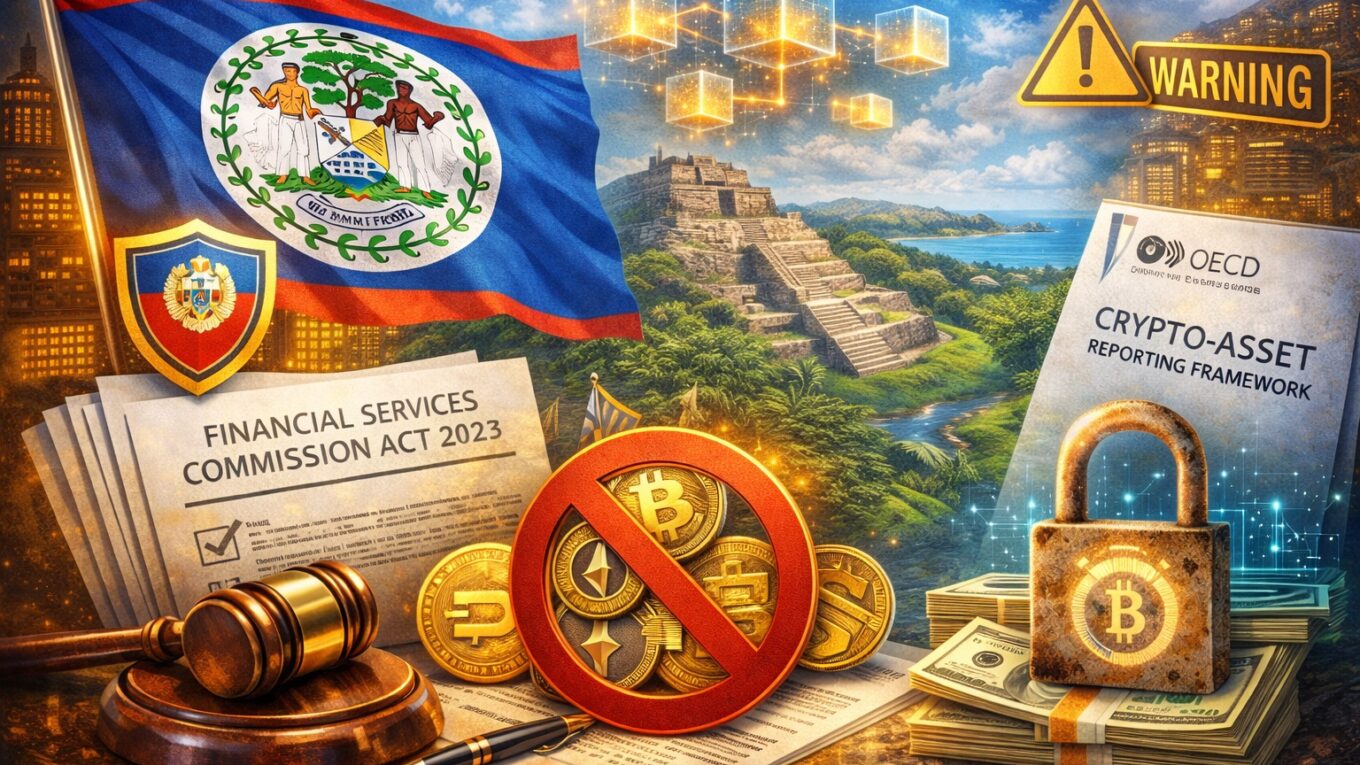
Cryptocurrency Regulation in Belize
At present, Belize does not have a comprehensive legal framework governing virtual assets, including cryptocurrencies. The Financial Services Commission (FSC), which oversees financial regulation, has not issued detailed laws or guidelines specifically addressing digital asset activities.
This regulatory gap means that while crypto-related activities are not explicitly prohibited, businesses and individuals operating in the sector must navigate an evolving legal environment.
Regulatory Warnings and Legal Developments
The FSC has issued warnings regarding unlicensed virtual asset activities, emphasizing that certain operations require regulatory oversight.
Key legislative developments include:
✔ The Financial Services Commission Act (2023) introduced restrictions on virtual asset businesses
✔ Activities such as brokerage, exchange, and management of cryptocurrencies require licensing
✔ Operating without authorization may result in legal consequences
✔ The FSC has delayed issuing licenses for virtual asset activities until December 31, 2025
The Act covers a broad range of digital asset operations, including:
-
Negotiation and brokerage of virtual assets
-
Cryptocurrency exchanges
-
Transfer and management of digital assets
-
Activities involving NFTs and certain in-game currencies
Entities that engaged in such operations before the Act’s implementation must notify the FSC and comply with cessation requirements within established timelines.
Non-compliance may lead to criminal sanctions under the provisions of the legislation, highlighting the importance of regulatory awareness and legal compliance.
International Compliance and Tax Reporting
In alignment with global financial transparency initiatives, Belize has joined the Crypto-Asset Reporting Framework (CARF).
This international standard facilitates:
✔ Automatic exchange of information between tax authorities
✔ Enhanced tax compliance for digital asset transactions
✔ Measures to reduce tax evasion
✔ Cooperation with jurisdictions that regulate cryptocurrency markets
By adopting CARF principles, Belize signals a commitment to international standards while evaluating domestic regulatory approaches.
Current Legal Landscape
While Belize lacks a detailed crypto regulatory framework, recent legislative actions indicate movement toward greater oversight.
Key takeaways:
✔ Crypto activities are not fully regulated
✔ Licensing requirements exist under the Financial Services Commission Act
✔ Regulatory frameworks may evolve in the future
✔ Businesses must prioritize compliance with existing financial laws
This transitional environment presents both opportunities and responsibilities for digital asset enterprises.
Considerations for Businesses and Investors
Entities interested in crypto-related operations in Belize should adopt proactive compliance strategies:
1. Legal Entity Formation
Businesses should register through appropriate governmental channels to establish legal recognition and operational structure.
2. Compliance with Financial Standards
Adherence to AML (Anti-Money Laundering) and KYC (Know Your Customer) protocols remains essential for financial operations.
3. Monitoring Regulatory Changes
Given the evolving nature of digital asset regulation, businesses must stay informed about policy updates and legislative developments.
Future Outlook
The regulatory trajectory in Belize suggests increasing oversight of virtual assets. Global trends toward financial transparency and consumer protection may influence future policy decisions.
For businesses and investors, this means:
✔ Opportunities exist within the current legal framework
✔ Regulatory changes may introduce new compliance requirements
✔ Proactive legal and operational planning is essential
Staying informed and compliant reduces legal risk and enhances operational stability.
Legal and Professional Advice
Navigating cryptocurrency regulation requires expertise in financial and legal compliance. Businesses considering operations in Belize should consult professionals familiar with:
✔ Financial services regulation
✔ Business registration requirements
✔ AML/KYC obligations
✔ International compliance standards
Professional guidance ensures adherence to legal requirements and supports sustainable business operations.
Final Thoughts
The cryptocurrency landscape in Belize remains in development. While no comprehensive regulatory framework exists, legislative actions demonstrate increasing attention to digital asset oversight.
For businesses and investors, this environment offers potential opportunities—provided they prioritize compliance and monitor regulatory developments.